The Best-Trained Product Managers for the AI Era Didn’t Study Computer Science
There’s a hiring assumption baked into most tech companies that’s about to become a serious liability: that the best Product Managers for AI-powered products come from technical backgrounds.
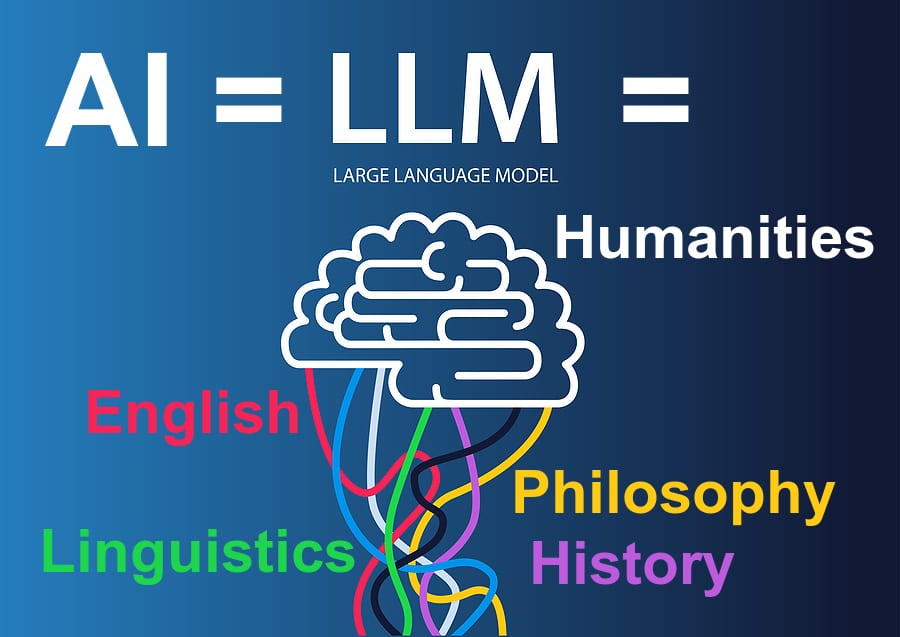
They don’t. The best-trained PMs for AI engagement are Humanities majors, and most of them don’t know it yet.
I’ve spent 25 years shipping products across adtech, payments, EV charging, media streaming, and blockchain. I’ve worked alongside engineers, data scientists, and MBAs. And in the past two years, watching how different people actually engage with AI tools, a pattern has become impossible to ignore: the people who get the most out of AI are the ones who were trained to think about language, meaning, ambiguity, and human behavior.
That’s not a STEM skill set. That’s a Humanities degree.
AI Is a Language System. Language Is What Humanists Study.
Let’s start with what AI actually is at its foundation. Large language models; Claude, ChatGPT, Gemini, are, at their core, prediction engines trained on human text. They generate responses based on patterns in language. They don’t compute. They don’t retrieve facts from a database. They interpret and respond.
This means that working effectively with AI is fundamentally a language problem, not a math problem. The quality of what you get back from an AI is almost entirely determined by the quality of what you put in. And writing a high-quality prompt isn’t a coding exercise; it’s closer to writing a well-formed argument or a precise legal brief.
Humanists have been training for this their entire academic careers.
A Philosophy major who spent four years learning to construct tight logical arguments and identify hidden assumptions in a text is already doing prompt engineering; they just don’t have the vocabulary for it yet. An English major trained in close reading, who learned to notice what a text says versus what it implies, who understands that word choice matters and that structure shapes meaning- that person will write better prompts than a software engineer who approaches the problem as a configuration exercise.
Ambiguity Is a Feature, Not a Bug, If You Know How to Work With It
One of the most consistent frustrations I see from technically-minded people working with AI is their discomfort with ambiguity in the output. AI doesn’t return a clean boolean. It doesn’t give you a deterministic result you can verify against a spec. It gives you a response that needs to be read, interpreted, and evaluated.
Humanists live in this space. A History major who spent years analyzing primary sources learned to hold multiple interpretations simultaneously, weigh evidence, and draw provisional conclusions. A Literature student learned that a text can mean more than one thing, and that your job as a reader is to develop a disciplined interpretation, not wait for a single “correct” answer.
This is exactly the skill set required to work with AI output professionally. You don’t accept it uncritically. You don’t reject it because it’s not deterministic. You read it, evaluate it, push back on it, and know when it’s good enough to use.
Product Management Has Always Been a Humanities Discipline
Here’s the thing most technical PMs miss: the core PM skill set was never technical to begin with.
Discovery is anthropology. You’re observing human behavior, asking questions designed to surface unstated needs, and synthesizing what you find into a coherent picture of a problem. You’re doing fieldwork.
Writing a PRD is rhetoric. You’re making an argument for why a specific thing should be built, in a specific way, for a specific reason, and you need to persuade an engineering team, a design team, and an executive simultaneously. The structure of that argument matters as much as its content.
Roadmapping is narrative. You’re telling a story about the future: what we’re doing, why in this order, and why the things we’re not doing yet can wait. The best roadmaps I’ve seen read like well-edited essays. The worst read like spreadsheets.
Stakeholder communication is translation. You’re taking a complex technical and strategic reality and rendering it in terms that different audiences, boards, customers, engineers, sales teams, can understand and act on. This is what Humanities majors spend four years learning to do.
None of this requires calculus. All of it requires the ability to think clearly, write precisely, and understand how humans make sense of the world.
Empathy at Scale: Why This Matters More for AI Products
When you’re building an AI-powered product, you’re building something that interacts with users through language. The product doesn’t display buttons and forms; it generates responses, asks follow-up questions, interprets intent, and adapts.
Getting that right requires a deep intuition for how people actually communicate. Not just what they say, but what they mean. Not just the request, but the context and the emotional state behind it. Not just the words on the screen, but what the user was hoping for when they typed them.
This is the territory of Psychology, Sociology, Anthropology, and Literature; not Computer Science.
A PM who has read widely, who has studied how people construct meaning, who has thought carefully about the gap between what people say and what they want, that person will make better product decisions on an AI-driven interface than someone who sees the problem purely as a systems design challenge.
The Ethics Problem Nobody Is Solving Well
AI products raise ethical questions constantly: about bias, about transparency, about what the product should and shouldn’t do, about where to draw lines. Most technical teams are not equipped to reason about these questions rigorously, not because they’re not smart, but because ethics wasn’t in the curriculum.
Philosophy and History majors were explicitly trained in ethical reasoning. They read the frameworks. They learned to apply them to hard cases. They understand that ethical questions don’t have clean answers and that the process of working through them carefully still matters.
As AI products become more capable and more embedded in consequential decisions, medical, financial, legal, the PMs who can reason clearly about ethical tradeoffs are going to be the ones organizations need in the room. That’s not a technical skill. It’s a philosophical one.
What Humanities Majors Need to Add
None of this means Humanities PMs get a free pass. There are real gaps to close.
You need to understand how AI models actually work at a functional level, not to train them, but to set accurate expectations about what they can and can’t do, where they hallucinate, and what kinds of tasks they’re suited for. This is learnable in weeks, not years.
You need to get comfortable with Claude’s API and basic Python scripting, enough to build quick prototypes and test your product assumptions without waiting for an engineer. Again, this is more accessible than it sounds, especially with AI assistance to help you learn.
And you need to develop a Product instinct for what makes a good AI interaction, which takes experimentation, iteration, and a willingness to use the tools constantly rather than theorize about them.
These are not insurmountable gaps. They’re a few months of focused work. The Humanities foundation, the ability to think clearly, write precisely, reason about human behavior, and work comfortably with ambiguity, is far harder to teach and far harder to hire for than Python.
The Opportunity
There’s a generation of Humanities graduates who were told their degrees were impractical and their skills were irrelevant in the technology economy. Some of them went back to school. Others took bootcamps. A lot of them never made it into tech at all.
AI changes that equation. The most valuable skill in the AI era isn’t the ability to write code, it’s the ability to think clearly about what to build, communicate it precisely to humans and machines alike, and reason carefully about the consequences. That’s a Humanities education.
If you studied English, History, Philosophy, Linguistics, Sociology, Anthropology, or any related field, and you’ve been told that tech isn’t for you, I’d challenge that assumption hard.
The companies that figure this out first are going to build AI products that actually work for people. The ones that keep hiring for technical credentials alone are going to keep building impressive-sounding things that miss the point.
Rob Lewis is a Chief Product Officer and AI product strategist. He publishes frameworks, templates, and real work examples for Product Managers building with AI at roblewis.com and github.com/localvalue/ai-product-management.